Fight the Evidence Against You With a Drug Offence Lawyer Focused on Your Defence
October 30, 2026
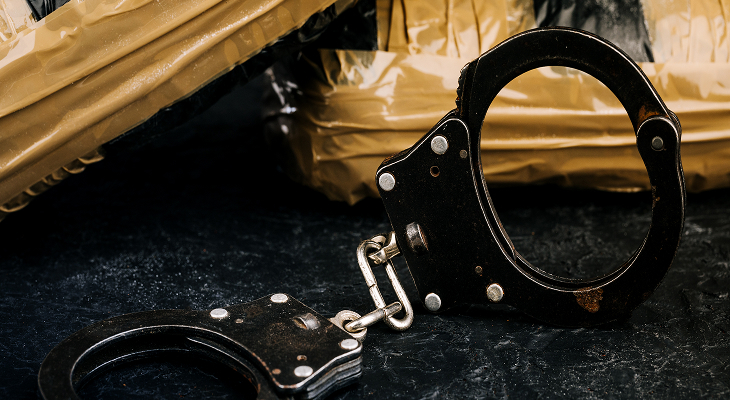
Police found drugs in the car, took your phone, or searched a room you share with someone else. Now the report makes everything sound settled, and every piece of evidence seems to point in one direction. That can hit hard when you know the situation was more complicated than the few lines written about it. Suddenly, you are wondering whether anyone will look beyond what police say happened.A drug offence lawyer can do exactly that by examining what police found, how they found it, and whether the Crown can actually connect the evidence to the charge. This article shows where those connections can weaken, which details deserve attention, and how a defence starts taking shape when the evidence is tested rather than simply accepted.
This is often the point where the case becomes easier to see clearly. Instead of one giant pile labelled “evidence,” each piece gets tested for what it actually proves. Some pieces remain strong. Others may carry far less weight once the context comes back into view.That focus matters when your future is tied to the result. You do not need someone inventing arguments just to sound aggressive. You need a defence that knows where to push, where the Crown is vulnerable, and where the evidence needs a hard answer.
The Drugs Were Found. Does That Automatically Make Them Yours?
No. Drugs found near you do not automatically prove that you knowingly possessed them, and the Crown still has to prove the offence beyond a reasonable doubt. When drugs turn up in a shared car, apartment, bedroom, bag, or other space, a drug offence lawyer can examine what actually connects you to them instead of allowing proximity to do all the work.Imagine drugs are found under a passenger seat while several people are inside the vehicle. Police may form a theory quickly, but that does not answer who knew the drugs were there, who had access to them, or what other evidence ties them to one particular person. Those details can shift the discussion from “the drugs were close to you” to the much harder question of what the Crown can actually prove.This is where the defence starts pulling the story apart carefully. Who owned or controlled the space? Who else had access? What did officers actually observe before the search, and what conclusions did they draw afterward? A case can look very different once assumptions are separated from evidence.Police Searched the Car, Home, or Phone. Did They Have the Right to Do It?
Police need lawful authority for a search, and the way they obtain and exercise that authority can become a major issue in a drug case. Section 8 of the Canadian Charter protects against unreasonable search and seizure, so a defence lawyer can examine why the search happened, what authority police relied on, and whether they stayed within its legal limits. A search that produced important evidence deserves more scrutiny than simply noting that police found something.A warrant can make a search feel impossible to question. It has a judge or justice behind it, police acted on it, and the evidence is already sitting in the disclosure. But the existence of a warrant does not mean the defence stops asking questions.What information did police rely on to obtain it? What location, device, container, or property did it actually authorize them to search? Did officers search beyond those limits once they were inside? Those questions matter because police authority has boundaries, even during a serious drug investigation.A Search Warrant Looks Final. Can a Drug Offence Lawyer Still Challenge It?
Yes. A drug offence lawyer can examine and, where there is a proper legal basis, challenge a search warrant or the way police executed it. The defence may scrutinize the information used to obtain the warrant, whether the required legal threshold was met, and whether officers stayed within what the warrant actually authorized.Police may build a warrant application from surveillance, officer observations, informant information, records, or several sources combined. On paper, that package can look impressive. The defence can go back through it piece by piece and ask a question the reader may already be wondering: was there really enough there to justify what police did?That review does not mean every warrant contains a fatal flaw. Some withstand scrutiny. Others raise issues that deserve to be argued because the search produced evidence sitting at the centre of the Crown’s case. The point is simple: official does not mean unquestionable.Your Phone Is in Police Hands. What Are They Actually Trying to Prove With It?
Phone evidence can support a drug prosecution, but a text, call, photograph, contact, or location record still needs to be connected to the alleged offence and understood in context. A drug offence lawyer can examine who used the device, what the communications actually mean, how police obtained them, and whether the Crown’s interpretation fits the complete conversation. A message that looks bad in isolation may look very different once the surrounding evidence is considered.Think about a message that says, “bring it over.” Once police place those three words inside a drug investigation, they may suddenly sound incriminating. But who sent the message, what came before it, what came afterward, and what “it” actually referred to are not small details.Police may already have their interpretation. The defence does not have to borrow it. Messages, photographs, location data, and call records need to be placed back into their real context before anyone decides what they prove.The Disclosure Looks Bad. What Evidence Should Be Checked First?
A drug offence lawyer should first examine the evidence that directly connects you to the alleged offence, then trace how police obtained and interpreted it. That usually means looking closely at the seized drugs, search records, officer notes, video, digital evidence, witness accounts, and any statements attributed to you. The first goal is not to challenge everything in sight; it is to find the parts of the Crown’s case that actually carry the weight.A focused review may ask:- Where exactly were the drugs found, and who could access that location?
- What authorized the police search, and did officers stay within those limits?
- Do police notes match video, photographs, timelines, and other records?
- Who used the phone or account that contains the digital evidence?
- How did police obtain any statements now being attributed to you?
- What evidence actually connects you to possession, trafficking, or importation?
You Already Spoke to Police. Did That Conversation Damage Your Defence?
Not necessarily. A statement to police can become important evidence, but a drug offence lawyer can examine whether it was voluntary, whether your legal rights were respected, what you actually said, and whether the Crown is interpreting the statement fairly. One answer that now looks terrible in a police report does not automatically decide the case.Maybe you answered questions because you thought cooperating would clear things up. Then you received the disclosure and saw one sentence pulled out in a way that feels nothing like the conversation you remember. That is an uncomfortable moment, especially when you start wondering whether you gave police exactly what they needed.The defence can compare the written account with recordings, officer notes, timelines, and the circumstances surrounding the conversation. Was the statement complete? Was part of the conversation left out? Does the Crown’s interpretation really follow from what you said? Those are better questions than assuming one line has already ended the defence.Police Crossed a Legal Line. Can Their Evidence Still Be Used Against You?
Evidence connected to a Charter breach can sometimes be excluded, but a rights violation does not automatically remove the evidence or end the charge. Under section 24(2) of the Canadian Charter of Rights and Freedoms, courts consider whether admitting evidence obtained through a Charter breach would bring the administration of justice into disrepute. A drug offence lawyer can assess whether a breach occurred, how serious it was, and what it could mean for the evidence the Crown wants to use.This is where false promises help nobody. Hearing that police made a mistake can create a rush of hope that the entire case will disappear, but the court still has work to do. Some breaches have limited impact, while others touch evidence that the prosecution cannot easily replace.If the disputed evidence sits at the heart of the case, exclusion can change the landscape significantly. The Crown may then have to prove possession, trafficking, importation, or another allegation without a piece of evidence it expected to rely on. That does not guarantee the final outcome, but it can change what the defence is dealing with.What a Drug Offence Lawyer Looks For: The Crown Has a Stack of Evidence
The weaknesses that matter most are the ones that affect an essential part of the Crown’s case or the legal use of important evidence. A spelling mistake in a report probably changes little, while weak proof connecting you to drugs, an unlawful search, a problematic statement, or digital evidence taken out of context may deserve much closer attention. Strong defence work means knowing the difference.| What Looks Damaging | What the Defence Needs to Test | Why It Could Matter |
| Drugs found in a shared car or home | Knowledge, access, control, other occupants | Being nearby does not by itself answer who possessed them |
| A police search | Authority, grounds, scope, Charter compliance | May affect how important evidence was obtained |
| Texts or phone records | User, context, meaning, method of collection | Police interpretation may not tell the whole story |
| A statement to police | Voluntariness, rights, recording, context | May affect whether or how the Crown can rely on it |
| Officer observations | Notes, video, timing, inconsistencies | Can expose gaps between the allegation and the record |

